




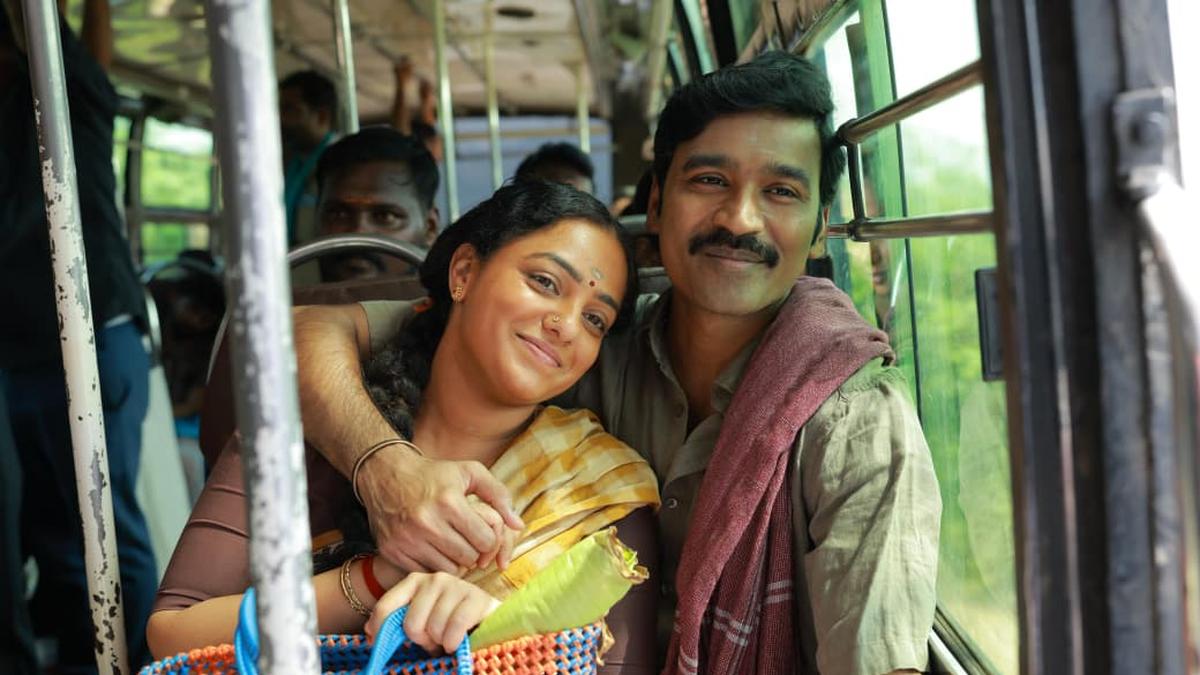
Idli Kadai: The Timeless Tale of a Steamed Classic—Hit, Flop, or Immortal? The question echoes across the industry: Was Dhanush’s directorial and starring vehicle, Idli Kadai, a culinary masterpiece or a bittersweet failure at the box office? The answer, like the film’s narrative itself, is a study in contrasts.

The theatrical run, which commenced on October 1, 2025, opened to a respectable 10.4 crore gross on Day 1, demonstrating the undeniable star power of its lead actor (Koimoi, Sacnilk). However, this initial momentum proved fleeting. Against a reported budget of 100 crores, the film concluded its theatrical journey with a closing worldwide gross collection of approximately 71.91 crores and an India net collection of 50.35 crores (Koimoi). By standard industry metrics, this financial performance secures a “Losing” verdict against its investment, failing to even enter Dhanush’s post-COVID top five highest-grossing films (Koimoi). In the theatrical arena, Idli Kadai was a flop. Read my full movie review here.
Yet, the narrative shifts with the aroma of home on streaming platforms. Its late October 2025 OTT release on Netflix saw an astonishing surge in viewership, with reports indicating it recorded more views in its first five days than a major contemporary blockbuster had achieved in eleven (Track Tollywood). This digital revival suggests the film’s heart-tugging, nostalgic theme—the lure of “returning to one’s roots”—found a resonant and appreciative audience in the intimacy of home viewing, turning its ultimate fate into a more complex, “Mixed” or “Cult-Hit” digital success story.
In the vast, tumultuous kitchen of global gastronomy, where trends flare up and fade like flash paper, a few dishes manage to transcend the ephemeral. They do not merely survive; they endure, becoming part of the very bedrock of a culture. Among these culinary immortals, few hold a place as cherished, yet as quietly formidable, as the South Indian Idli.
The question of whether an Idli Kadai—an eatery dedicated to this humble, steamed rice cake—is a “hit or flop” entirely misses the point. It’s like asking if water is a hit or a flop. An Idli Kadai doesn’t deal in passing fancy; it trades in a fundamental, almost spiritual, necessity. It is the repository of a 1,000-year-old tradition, a crucible for health, and a sanctuary for the palate. To understand its modern success, we must first trace the quiet power woven into its very batter.
The journey of the Idli is a fascinating narrative, a testament to culinary evolution and cross-cultural exchange. While many assume its deep roots lie exclusively in South India, food historians suggest a more nomadic past. The earliest mention, around 920 CE, appears in a Kannada text, Vaddaradhane, referring to a dish called “iddalige.” However, this was likely a black gram-only preparation, devoid of rice, fermentation, and steaming as we know it today.
The key to the modern, pillowy-soft Idli—the harmonious blend of rice, black gram (urad dal), long fermentation, and steam—appears to have coalesced much later. Culinary historian K.T. Achaya famously theorized an Indonesian connection, suggesting that the technique of fermenting and steaming batter may have been brought back by cooks associated with Indianized kingdoms in the archipelago between 800 and 1200 CE, citing similar dishes like kedli(Achaya, Indian Food: A Historical Companion, 1994). Regardless of the final port of origin, by the 17th century, the Idli had become inextricably woven into the fabric of the South Indian meal.
This historical weight is what separates an Idli Kadai from a fleeting food trend. It serves not just a meal, but a piece of history, an unbroken chain of tradition.
For the health-conscious modern consumer, this combination is unbeatable. It is gluten-free, packed with fibre and protein, and easily digestible—a rare trifecta in comfort food. A Idli Kadai, therefore, is not just selling fast food; it is marketing an ancient, scientifically-backed health staple. The “hit” Idli Kadai, therefore, offers a curated journey through these variations, moving beyond the simple coconut chutney and sambar pairing to offer accompaniments like spicy Podi (Gunpowder), tangy tomato-onion chutneys, and rich, regional Sambar recipes.


The premise of “Hit or Flop” only applies to transient trends. The Idli, and by extension, the dedicated Idli Kadai, operates on a different plane.
Idli Kadai: The Timeless South Indian Steamed Cake. The humble Idli, a light, fluffy, and highly digestible South Indian rice and urad dal cake, is an undisputed culinary triumph spanning over a thousand years. Made through a natural fermentation process, this classic breakfast staple is a potent probiotic source, rich in fibre, low in fat, and naturally gluten-free. While the debate of “Idli Kadai: Hit or Flop” is irrelevant to this cultural icon, its lasting success stems from its foundational health benefits and incredible regional versatility, from the flat Thatte Idli of Karnataka to the spiced Kanchipuram Idli of Tamil Nadu.
The Idli Kadai is a cultural anchor. It is the first stop for a homesick traveler, the default meal for a busy office worker, and the recommended breakfast for a recovering patient. Its success is not measured by temporary buzz but by its omnipresence and constant, reliable utility.
The market may be flooded with competitors—dosas, vadas, pancakes, and smoothies—but the Idli stands tall, buoyed by its unbeatable health credentials, its historical gravitas, and its sheer versatility. It is low-fat, highly digestible, naturally probiotic, and culturally invaluable.
In the final analysis, a Idli Kadai is never a flop. At worst, it is a modest success; at its best, it is a bustling, steam-filled monument to a timeless culinary truth. The Idli is more than a dish; it is a dietary imperative, a thousand-year-old success story that continues to steam its way into the future, one perfect, fluffy cake at a time. Read more about ending of Idli Kadai explained here.