




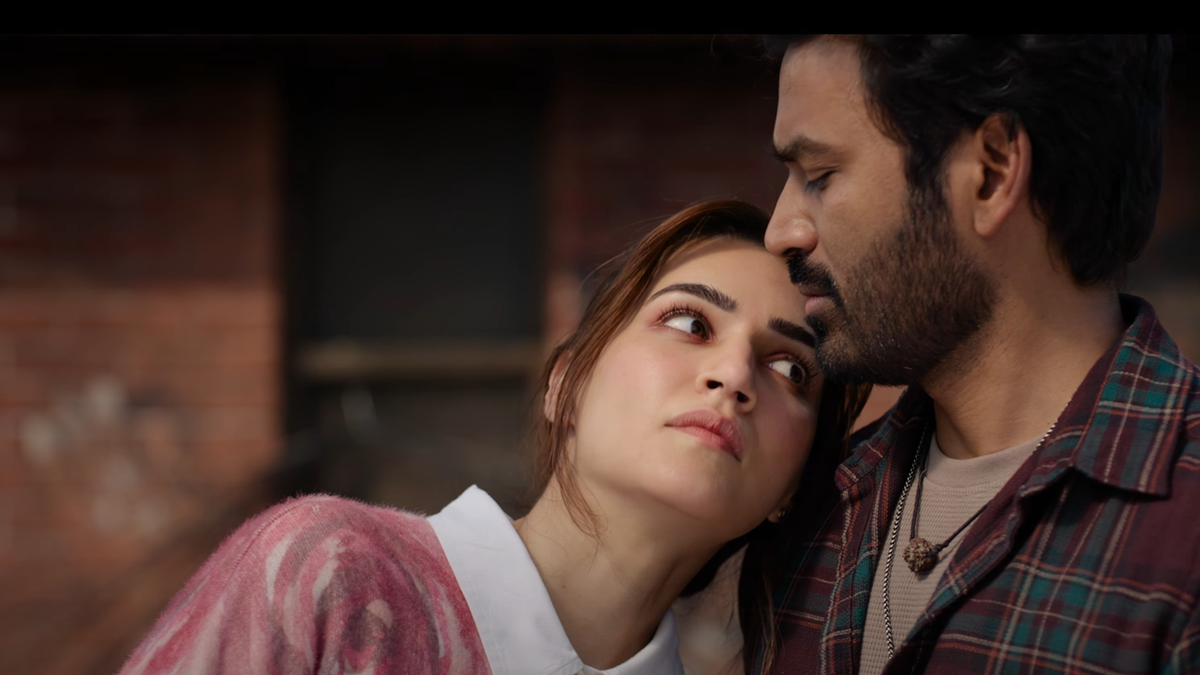
Tere Ishk (Ishq) Mein is an intense Hindi-language romantic drama directed by Aanand L. Rai and starring Dhanush and Kriti Sanon. Released on November 28, 2025, the film is a spiritual sequel to Raanjhanaa (2013), exploring themes of obsessive love, betrayal, and self-destruction. The plot follows Shankar (Dhanush), a hot-headed college politician and later an Air Force pilot, whose life is consumed by his volatile relationship with PhD student Mukti (Sanon), who initially uses him for her thesis. While the film is hailed for Dhanush’s raw, career-best performance, the palpable chemistry between the leads, and A.R. Rahman’s powerful, soul-stirring music, it has drawn criticism for its overlong runtime and a morally ambiguous narrative that romanticizes toxicity and mental health issues for dramatic effect. The film is positioned as a major commercial success, particularly among audiences who appreciate high-drama, intense love stories.
The Fire and The Fury: Why Aanand L. Rai’s Tere Ishk (Ishq) Mein (Review) is a Spectacular, Yet Problematic, Return to the Altar of Toxic Love
There is a peculiar, almost liturgical rhythm to a love story directed by Aanand L. Rai. It is always set in the beating, messy heart of India—Banaras, Delhi, a world of sun-drenched, chaotic streets—where passion is not a gentle breeze but a raging inferno, and love is not a promise but a profound, often self-destructive, obsession. With Tere Ishk (Ishq) Mein, his much-anticipated third collaboration with the powerhouse performer Dhanush, Rai returns to this sacred turf with a film that is louder, angrier, and more spectacular than his previous offerings. It is a full-throated operatic melodrama that both thrills the senses and deeply unnerves the conscience.
The film, released on November 28, 2025, wastes no time in establishing its high-stakes emotional premise. We are introduced to Shankar (Dhanush), first as an explosive, instinctive Air Force pilot engaged in a war that mirrors the one constantly raging inside him. He is immediately grounded and sent for counselling, a cinematic device that launches the narrative into a lengthy, turbulent flashback, revealing his past as a volatile Delhi University Students’ Union Presidentand his first encounter with Mukti (Kriti Sanon).
Mukti, a psychology PhD student, sees Shankar not as a person but as a subject—a fascinating case study for her thesis on whether violence can be tamed and love can be the antidote. The premise is immediately compelling: a calculated pursuit that turns into genuine, if fractured, love. Dhanush, in what many critics and netizens are calling a career-best performance (Source: Economic Times, Times of India), embodies Shankar with a visceral intensity that is hard to shake off. His eyes, perpetually wounded and simmering with rage, convey the pain of a man forged in trauma and class-based insecurity. He is the ultimate broken hero, prone to violence, yet capable of profound, unwavering devotion—the quintessential Rai protagonist, but dialled up to eleven.
Mukti, too, is far from the typical Bollywood heroine. Sanon shines brilliantly, delivering a nuanced, layered performance (Source: The Financial Express). Her character is a maze of contradictions—intelligent, educated, yet prone to self-sabotage, grappling with her own demons and questionable ethical choices, particularly her decision to manipulate Shankar for her research. The chemistry between Dhanush and Sanon is the film’s undeniable fuel; it is electrifying, full of tension, and believable in its mutual, albeit self-destructive, attraction.


Where the film truly excels is in its technical majesty. Director of Photography Tushar Kanti Ray captures the geographical and emotional landscape with breathtaking scale, from the vibrant, teeming lanes of Banaras to the austere silence of the Air Force base. But it is the music of A.R. Rahman that is the film’s very soul. Rahman, reuniting with Rai after their previous successes, delivers an album for the ages. Tracks like the titular song, with its aching melodies, and the powerful background score, particularly during the explosive interval block, do the heavy lifting, elevating the drama and cementing the film’s emotional resonance. Netizens have widely praised the music, noting its nostalgic callback to the soulful depth of Raanjhanaa.
However, a great tragedy of a film built on such raw emotional power is that it often forgets its own moral compass. The narrative, penned by Himanshu Sharma and Neeraj Yadav, has been widely criticized for taking the toxicity of its spiritual prequel, Raanjhanaa, and multiplying it. The film, which runs for nearly three hours (169 minutes), overstays its welcome, becoming an unconvincing thesis on toxic love.
The central conflict, where Mukti ultimately walks away after completing her thesis, leaving Shankar with a monumental task, and their eventual reunion years later where she is a troubled psychologist and he is a vengeful Air Force pilot, is rife with logic gaps and problematic glorification. Shankar’s rage—his threat to “burn all of Delhi” for his broken heart—and the film’s tendency to use significant, emotionally charged elements like UPSC exam preparation and class conflict as mere dramatic plot devices, detract from the potential for a deeper, more honest exploration (Source: The Indian Express). The film appears to argue that male violence and obsessive pursuit are almost inevitable outcomes of a broken heart, a narrative standpoint that feels regressive in 2025.
In the end, Tere Ishk Mein is an intoxicating experience, a cinematic bonfire that leaves you scorched but unable to look away. It is an extraordinary performance by Dhanush and a standout musical album by A.R. Rahman wrapped up in a flawed, problematic, yet undeniably ambitious script by Aanand L. Rai. It will be devoured by the masses who seek high-octane emotional catharsis, but it collapses under the weight of its own moral and logistical inconsistencies. You go in for the fire, but you leave triggered and unsettled. Here to know where to watch it online.
The Review
Tere Ishk Mein
PROS
- Explosive Lead Performances: Dhanush and Kriti Sanon deliver intense, career-defining performances with palpable, high-voltage chemistry that anchors the turbulent emotional core.
- Soul-Stirring Music: A.R. Rahman’s profound soundtrack and atmospheric background score are hailed as the film's "soul," powerfully elevating the drama and intensity.
- Gripping Emotional Highs: The film successfully creates intense, unforgettable dramatic moments and a powerful interval block, satisfying audiences who crave grand, high-stakes melodrama.
CONS
- Glorification of Toxicity: The narrative is heavily criticized for its problematic, regressive stance on love, often romanticizing the lead male character's hyper-masculine rage and obsessive, destructive behavior.
- Overlong and Inconsistent Script: At nearly three hours, the film suffers from uneven pacing, a stretched second half, and a convoluted plot with convenient cinematic liberties and logical inconsistencies.
- Morally Ambiguous Character Writing: The script fails to convincingly portray the psychologist character (Mukti), whose manipulative and erratic choices often contradict her professional expertise.