



Baramulla ending explained: Beyond the Checkpoint: Unraveling the Final Ambiguity and Existential Horror in Baramulla’s Ending
The 2025 thriller Baramulla (or Baramulla: The Unfinished Chronicle), set against the volatile backdrop of Kashmir, culminates in a chilling, ambiguous ending that refuses simple resolution. Inspector Junaid’s final moments are marked by a descent into delirium and guilt, blurring the lines between reality and haunting hallucination. The film’s ultimate theme is the cyclical nature of trauma and conflict, suggesting that the violence and secrets of the past are not solved by justice but survive as restless spectres in the landscape and the minds of those who remain, particularly Junaid, who appears to succumb to the psychological weight of the region’s unfinished history.
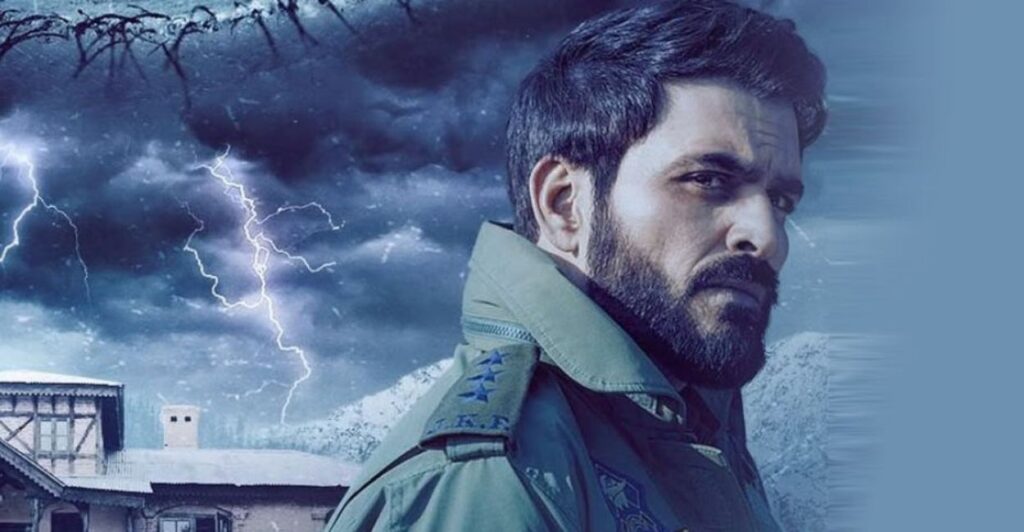
The Kashmir Valley, a land of unparalleled beauty and ceaseless tragedy, serves not merely as a setting but as a consuming character in the 2025 psychological thriller, Baramulla. Directed by a rising voice in Indian cinema, the film eschews political polemics for a deeply unsettling exploration of the existential horror that permeates a community living under constant conflict, surveillance, and loss. The story of Inspector Junaid (a veteran Kashmiri police officer tasked with investigating a series of disappearances linked to a decades-old covert operation) is less a whodunit and more a descent into a shared, collective madness.
Baramulla: Where to Watch FREE? Prime Video, JioHotstar or Netflix online Release date
The ending of Baramulla is a masterclass in ambiguity, refusing the comfort of a clean resolution and instead leaving the audience stranded, much like its protagonist, in the desolate silence of a snow-covered landscape where the past is never truly past.
Baramulla ending explained: The Search for Truth and the Loss of Self
Throughout the film, Inspector Junaid is burdened by two conflicting forces: his professional duty to uncover the truth about the disappearances, and his personal, unspoken guilt over his own compromises made during years of policing a volatile region. The investigation leads him deep into the maze of a covert military operation—code-named ‘Operation Albatross’—from the 1990s, where several young men, deemed militant sympathizers, were secretly executed and buried.
The crucial turning point comes when Junaid, assisted by a young, ethically idealistic junior officer, uncovers the names and locations of the graves. This revelation is his triumph, but also his undoing. It forces him to face not only the state-sanctioned violence of the past but also his own complicity—the small, necessary evils he committed to survive within the system.
The antagonist, ultimately, is not a single person but the system of power and silence that allows such crimes to be covered up. The high-ranking officials Junaid confronts are merely the current caretakers of a legacy of violence. His failure is his realization that exposing the truth will not dismantle the system; it will only make him its next casualty.

The Psychological Break and the Blurred Line
As the final act unfolds, Junaid’s exhaustion, his near-fatal run-ins with those trying to silence him, and his growing understanding of the scale of the past atrocities lead to a profound psychological break. The film effectively blurs the line between reality, hallucination, and the collective memory of the valley.
- The Haunting Visions: Junaid begins to see the spectral figures of the disappeared men. They are not frightening jump-scare ghosts, but silent, pleading shadows in the snow, figures who mirror the very men he sought to save or whose plight he was forced to ignore years ago. They represent the unacknowledged grief and the unpaid debt owed by the living to the dead.
- The Snowstorm Metaphor: The final confrontation takes place during a blinding snowstorm. This is a classic cinematic technique, but here it is deeply symbolic. The storm represents the region’s historical amnesia, the way secrets and atrocities are constantly buried and preserved beneath layers of cold, white silence, only to thaw and re-emerge later.
In the penultimate scene, Junaid is seen at the site of the mass graves, clutching the file containing the victims’ names. He has the truth, but he is utterly alone. The weight of all those unavenged lives has become a tangible, physical burden.
The Final, Ambiguous Image: Succumbing to the Spectres
The most discussed element of the Baramulla ending is the final sequence: Junaid is running. He is not running to safety or to deliver the file; he is running aimlessly through the deep snow. He is no longer pursuing justice; he is being pursued by the landscape itself.
The camera holds on him as he collapses from exhaustion. As the screen fades to black, the very final shot is a fleeting,chilling moment: Junaid is no longer alone. The spectral figures of the disappeared men are gathered around him, silent witnesses in the white landscape, their faces indistinct but their presence undeniable.
The ambiguity of this scene offers three powerful interpretations:
- Psychological Collapse: The most grounded interpretation suggests that Junaid has finally succumbed to extreme exhaustion, guilt, and psychosis. The ghosts are purely subjective—the final manifestation of the trauma he inherited and that he failed to overcome. He has reached the Sunken Place of the Valley’s consciousness, permanently trapped by the images of the dead.
- Transcendence/Death: A darker reading suggests Junaid dies in the snow. His collapsing body is claimed by the place, and his joining the spectral figures implies he has become one of the restless spirits—another unresolved casualty added to the region’s ledger. He has not found justice; he has merely become part of the collective tragedy.
- The Cycle Continues: The most powerful thematic interpretation is that the truth is permanently entombed. Junaid, the man who held the key to Operation Albatross, has been neutralized—not by a bullet, but by the sheer, overwhelming weight of the past. The system of silence wins. The ghosts remain because their stories are still untold, and the next generation of police officers will have to begin the same doomed investigation from scratch.
Thematic Resolution: The Unfinished Chronicle
Baramulla rejects the Western thriller format of resolution and rescue. There is no final phone call, no triumphant press conference. The only certainty is that the conflict—the Unfinished Chronicle of the subtitle—is still unfolding, generation after generation.
The film serves as a searing indictment of the emotional cost of prolonged conflict, where individual survival necessitates the suppression of truth and empathy. Inspector Junaid’s fate is the embodiment of the region’s endless loop: a person tries to achieve clarity in a situation designed for permanent chaos, and in doing so, loses his mind, his body, and his peace.The haunting figures in the snow are the enduring legacy of Baramulla—a place where the victims may fade from memory, but their spectral presence remains forever, waiting for a true, collective reckoning that may never come.
The film serves as a searing indictment of the emotional cost of prolonged conflict, where individual survival necessitates the suppression of truth and empathy. Inspector Junaid’s fate is the embodiment of the region’s endless loop: a person tries to achieve clarity in a situation designed for permanent chaos, and in doing so, loses his mind, his body, and his peace. The haunting figures in the snow are the enduring legacy of Baramulla—a place where the victims may fade from memory, but their spectral presence remains forever, waiting for a true, collective reckoning that may never come.